

Medical condition
Developmental Dysplasia of the Hip
Developmental dysplasia of the hip is highly treatable when found early — a harness in the first months usually resolves it. Detected late it needs surgery and carries a risk of early arthritis, which is why newborn screening and prompt referral matter so much.
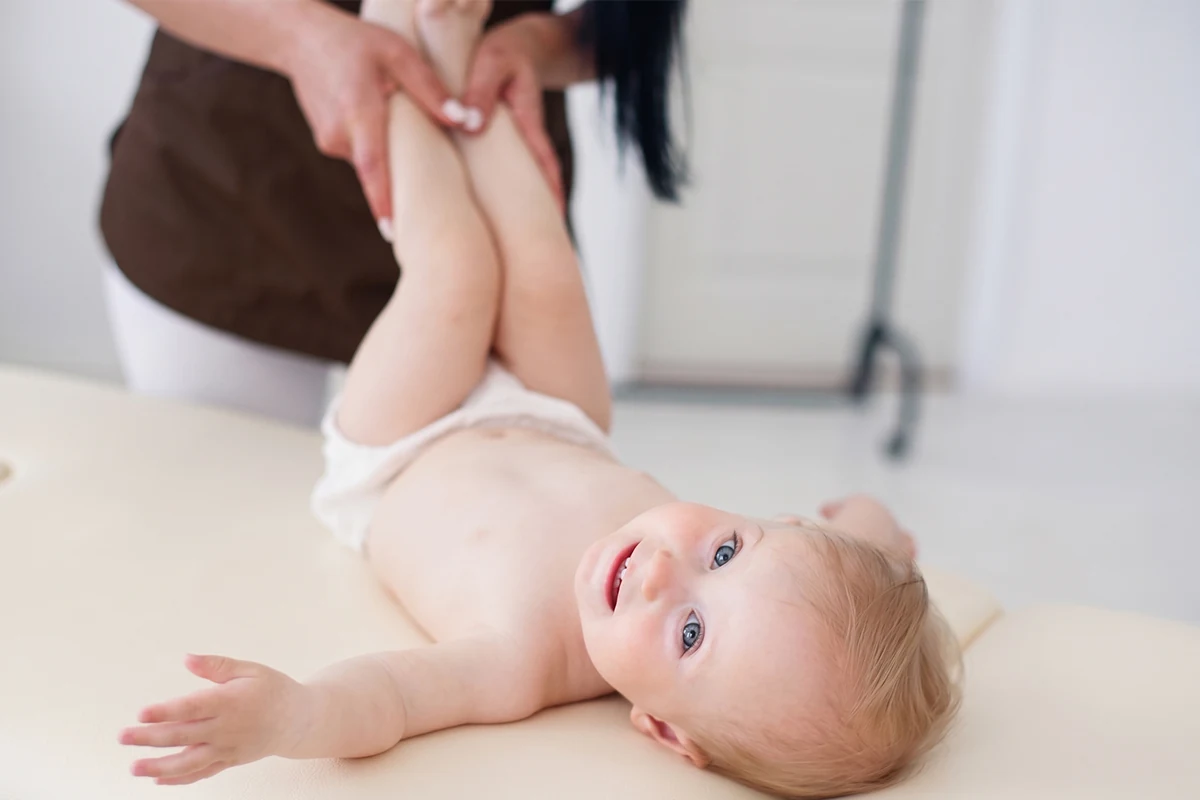
Why timing dominates everything
Treated in the first weeks with a harness, the great majority of hips develop normally. Detected at walking age, treatment means surgery, a period in a cast, and a meaningfully higher chance of hip problems in adult life.
An early diagnosis may spare a child invasive surgery and reduce the risk of early hip arthritis in adult life 5.
What raises the risk and what to look for
Breech position in the third trimester, a family history, being firstborn and female all raise risk. Breech presentation late in pregnancy or a close family history of hip problems in early life is a reason for an ultrasound scan at around four to six weeks even when the newborn examination is normal; being female or firstborn alone is not 4.
Later signs: asymmetrical thigh or buttock creases, one leg appearing shorter, restricted movement of one hip when changing a nappy, or a limp when walking begins. Any of these should be assessed rather than watched.
Treatment by age
In the first months, a Pavlik harness holds the hip in position while the socket develops, worn continuously for several weeks with regular ultrasound monitoring.
After around six months, or if bracing fails, treatment becomes surgical 5. The hip is put back into its socket under anaesthetic, by closed or open reduction, usually followed by a period in a hip spica cast. In older children, bony surgery may be needed. Each step up carries more risk and more recovery.
What rehabilitation contributes
After harness treatment, usually very little is needed — children develop normally. After surgery and casting, rehabilitation restores hip and knee range, rebuilds strength, and re-establishes normal gait.
Long-term follow-up into skeletal maturity is standard, because residual dysplasia can become apparent later and is easier to address before symptoms.
Why screening exists at all
Treated in the first months with a harness, the hip usually develops normally. Found at walking age it usually needs surgery, and hip dysplasia is the most common cause of hip arthritis in women younger than 40 1.
The entire difference is timing, which is why newborn examination and ultrasound screening for at-risk babies exist and why any suspicion is checked rather than watched.
Does every baby need a hip scan, and can mild findings be watched?
Not every baby. Clinical instability of the hip is found in 1% to 2% of full-term babies 1. Scanning all newborns finds more hip problems and leads to more treatment, but in a 2026 review of 819,277 infants it did not reduce late diagnosis or surgery compared with scanning selected babies 3. National screening in the UK scans babies with specific risk factors, at around four to six weeks, and those whose examination is abnormal 4.
Many mild forms of dysplasia settle without treatment 1. For hips that are unstable but not dislocated, or mildly dysplastic, in the first weeks, a repeat scan before any splint reduces treatment without increasing late-diagnosed cases 2. No screening programme catches every case 1. A limp, a leg that looks shorter or reduced hip movement later on therefore still needs checking.
Frequently asked questions
How is it treated in a newborn?
A harness holding the hips in the correct position for some weeks, with ultrasound monitoring. Success rates are high when started early.
What raises the risk?
Breech presentation, family history, being firstborn and female. Breech presentation late in pregnancy or a close family history warrants an ultrasound even when the examination seems normal; being female or firstborn alone does not 4.
Does swaddling matter?
Yes. Tight swaddling with the legs straight is associated with dysplasia; hip-healthy swaddling leaves room for the legs to bend and spread.
What if it is found late?
Treatment becomes surgical and more complex. It is still worth doing — untreated dysplasia raises the risk of early hip arthritis 1.
Does it cause pain in babies?
No, which is exactly why screening exists. There are no symptoms until much later.
Sources
- Shaw BA, Segal LS. Evaluation and referral for developmental dysplasia of the hip in infants — Pediatrics (2016)
- Shorter D, Hong T, Osborn DA. Screening programmes for developmental dysplasia of the hip in newborn infants — Cochrane Database of Systematic Reviews (2011)
- Miller ND, Gibson M, Nair A, Liu J. Preventing missed developmental dysplasia of the hip: universal vs. selective ultrasound screening — JBJS Reviews (2026)
- Newborn and infant physical examination (NIPE) screening programme handbook — NHS England (GOV.UK) (2025)
- Kim AR, Kim KP, Covey CJ. Developmental dysplasia of the hip — American Family Physician (2025)
Which therapies would I actually receive?
A therapy is a single method used inside a programme. It is measured in sessions and is not sold separately.
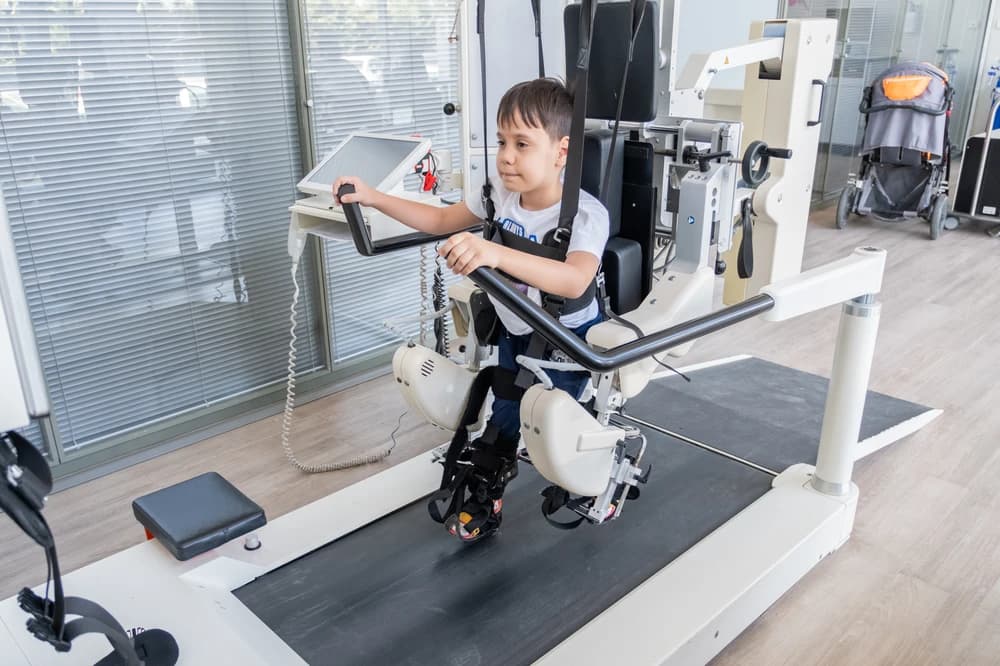
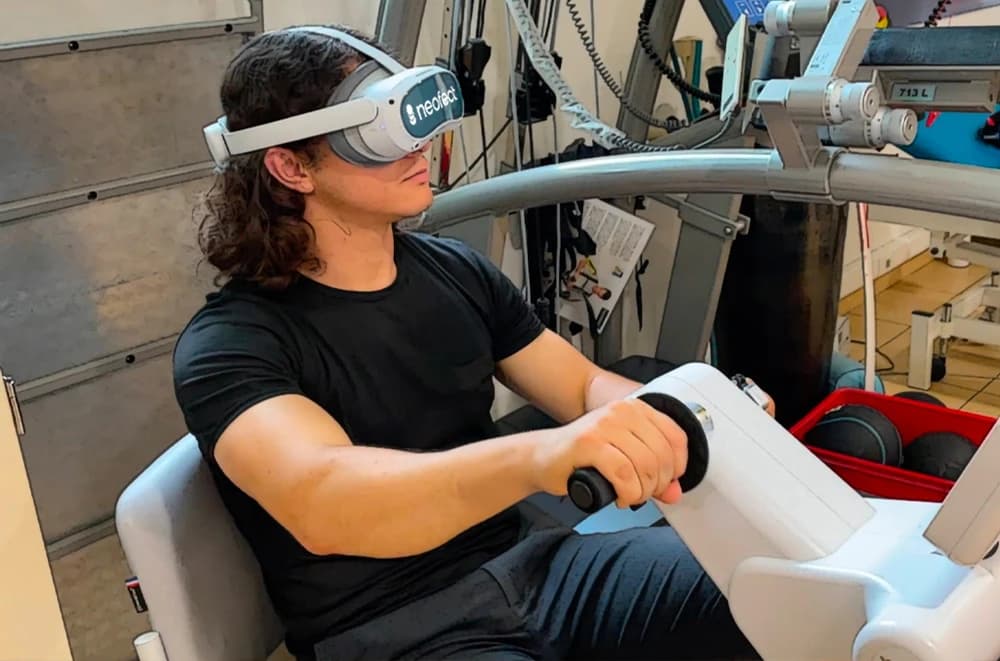
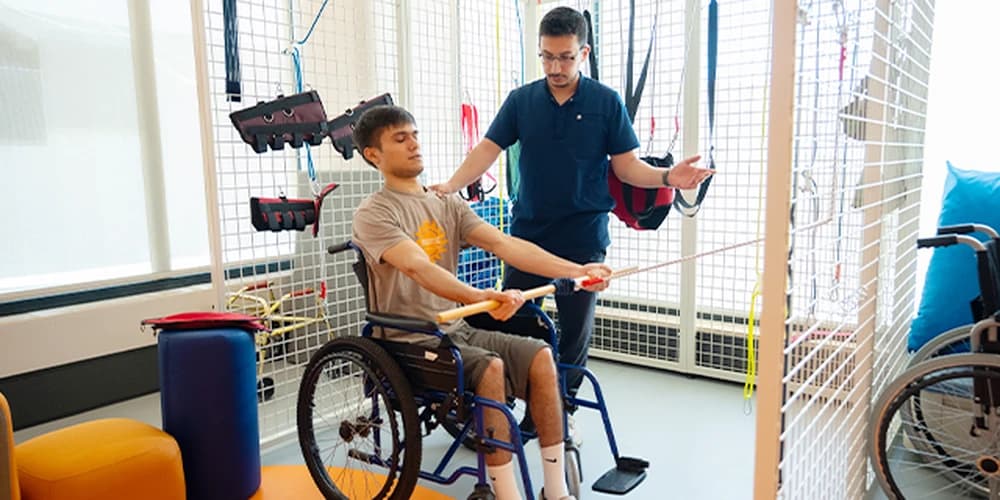
Technologies we use

Locations
Where you can receive this treatment






Related articles
Paediatric What are the signs of hip dysplasia in babies?
Hip dysplasia is often silent in the first year, so routine examination matters. Possible signs include uneven thigh or buttock creases, one leg appearing shorter, limited spreading of one leg during nappy changes, and later a limp or waddling walk. Babies born breech or with a family history may need an ultrasound scan.Read moreNeurological How long does it take to recover from a stroke?
Most recovery after a stroke happens in the early months, when the brain is most able to reorganise, and it continues more slowly for a longer period after that. How far someone gets depends mainly on how severe the stroke was, where it happened and how much active therapy follows.Read moreNeurological Can you walk again after a stroke?
Many people walk again after a stroke, including many who cannot stand at first. The chances are highest when some leg movement returns early and when walking practice starts as soon as it is safe. Walking often comes back before full arm recovery, sometimes with a stick, splint or other support.Read more



