
Paediatric rehabilitation: what changes for a child
Prof. Dr. Güneş Yavuzer of Romatem Move İstanbul on who paediatric rehabilitation is for, which conditions benefit, the methods used and the early signs parents should watch for.
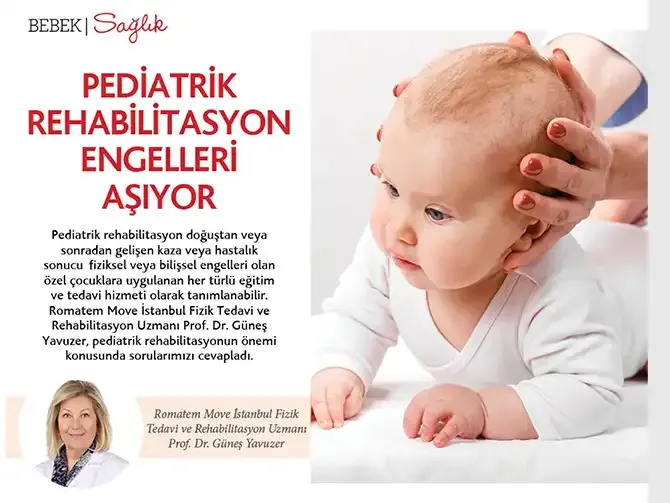
Paediatric rehabilitation covers every form of education and treatment for children with physical or cognitive impairments, whether congenital or acquired after an accident or illness. Prof. Dr. Güneş Yavuzer, physical medicine and rehabilitation specialist at Romatem Move İstanbul, answered the magazine’s questions.
Who is it for?
Children from birth to eighteen who have limitations in movement, speech, self-care or other daily activities. The aim is to raise functional skills as far as possible, so that the child can manage daily life and become self-sufficient in society. Treatment is delivered by a multidisciplinary team of health professionals that includes the family. A programme planned for the child’s needs, delivered in a suitable environment with the right equipment and an experienced team, is the key to success. The team assesses balance, walking, grasping, vision, hearing, swallowing, speech and social skills, and applies a programme aimed at full functional independence.
Which conditions benefit?
Cerebral palsy, spina bifida, brachial plexus injuries, torticollis, clubfoot, congenital orthopaedic anomalies, scoliosis, Osgood-Schlatter disease, paralysis after childhood infection, cancer or accidents, balance, gait and speech disorders, haemophilia and joint problems after childhood inflammatory arthritis can all benefit from paediatric rehabilitation.
The methods
The most effective method is therapeutic exercise. Water-based exercise, occupational therapy, speech and swallowing therapy, sensory integration, approaches that support cognitive function, suit therapy, electrotherapy and other physical therapy methods, injections, assistive devices and, where needed, surgery are used. Robots, computer games and virtual reality make therapeutic exercise more effective and easier for the child to keep up. “With neurodevelopmental and therapeutic exercise we aim to build muscle strength, balance and coordination, keep muscle tone under control, and prevent joint restriction and bone deformity. Using muscles correctly matters not only for the musculoskeletal system but for cognitive development and socialisation. Even standing in a simple standing frame contributes greatly to motor and mental development. Starting early and continuing regularly is very important.”
What parents should watch for
Following low-birth-weight and at-risk babies closely, and early diagnosis, raise the chance of success, so parents have an important part: watching development and raising concerns with the physician. Signs by age: at one month, feeding problems, no response to stimuli, continuous crying, frequent severe vomiting; at two months, the same plus seizures, floppy or very stiff muscles; at three months, squinting or twitching eyes, discomfort when laid on the back, not smiling, not recognising the mother or looking at a speaker’s face; at four months, no head control, eyes not focusing, hands always fisted, reflexes that do not disappear; at eight months, not rolling over, no hand coordination, kicking with both legs together, slumping when seated; at ten months, not sitting, crawling or standing, not responding to their name; at twelve months, not starting to walk even with support.
Robotic devices in paediatric rehabilitation
“Alongside conventional physical therapy, which is mostly therapeutic exercise, we use rehabilitation robots to bring out active movement in the arm and leg, support voluntary motor control, and develop grasping, balance and walking. Treatment made more effective and more fun with virtual reality and computer games brings great benefit for physical and cognitive function.”
Original title
News
More news
 Our clinicians in the pressEarly intervention after stroke saves livesAt a “Stroke School” for patients and families at Romatem Move Çamlıca, neurologist Dr.
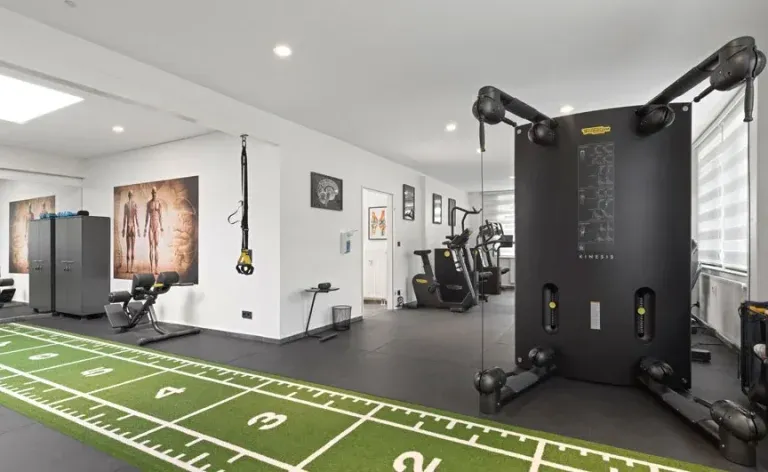 Our clinicians in the pressSpinal cord injury rehabilitation has to be planned for the individualProf. Dr.
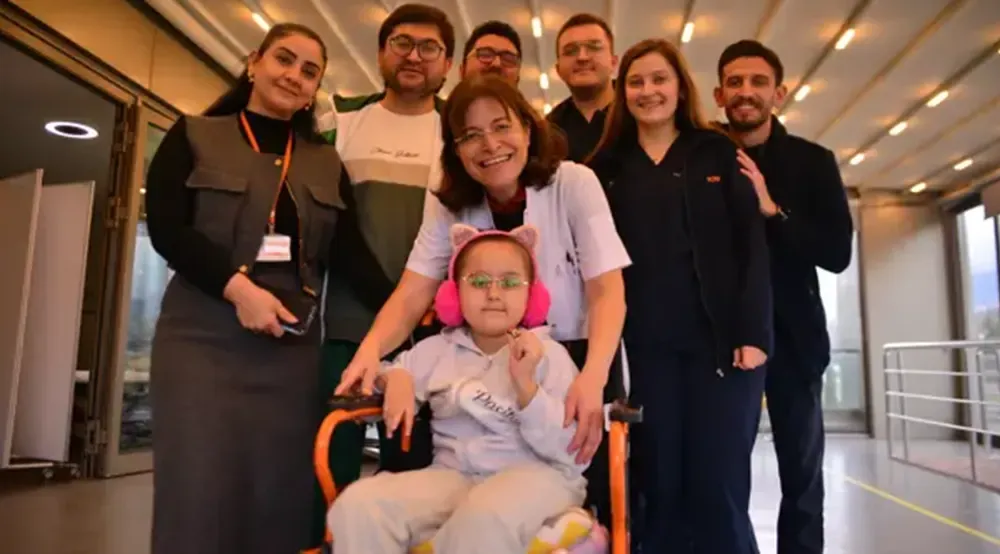 Our clinicians in the pressIndividually planned treatment for MS and Parkinson’s diseaseA rehabilitation unit built for MS, Parkinson’s and cognitive patients: what a five-person team does for gait, balance and memory, and how the work continues at home.



