
Early intervention after stroke saves lives
At a “Stroke School” for patients and families at Romatem Move Çamlıca, neurologist Dr. Nermin Çalışır and rehabilitation physician Assoc. Prof. Dr. Hülya Şirzai explained the first hours after a stroke, the rehabilitation that follows and why the family is part of the team.
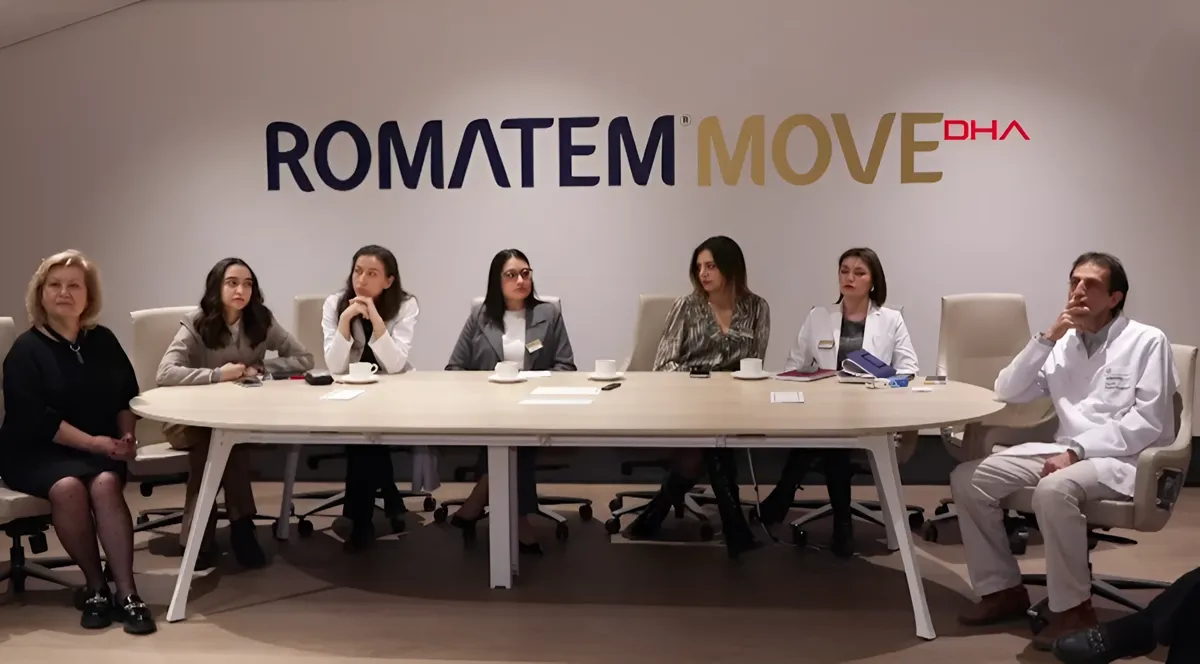
A “Stroke School” for patients who have had a stroke and their families took place at Romatem Move Physical Therapy and Rehabilitation Centre in Çamlıca, İstanbul. The programme covered care after stroke, the rehabilitation process, recovery and quality of life. Patients who had completed treatment after a stroke caused by a clot, and their relatives, described their experience and why recognising the signs early mattered.
Patients and families raise the success rate of treatment
Assoc. Prof. Dr. Hülya Şirzai, physical medicine and rehabilitation specialist and coordinator of the programme, said the event was built to show that rehabilitation is teamwork, and that the patient and the family sit at the centre of the team. “The more patients and their relatives contribute to rehabilitation, the better the outcome. When they do not take an active part, the result suffers. That is why we want families more involved.”
The programme answered practical questions: what a stroke is, how to recognise one at home, what to do immediately, what rehabilitation should follow discharge or the acute period, and how to make treatment work. “Stroke patients are not alone. Many people go through the same thing, and when those experiences are shared, the process is far easier to bear,” she said.
The first 4.5 to 6 hours are critical
Neurologist Dr. Nermin Çalışır explained that four out of five strokes are caused by a blocked vessel in the brain and one in five by bleeding. “The point is to keep brain cells alive. When the signs appear, someone nearby must call 112 without losing time. The first 4.5 to 6 hours are critical for treatment to be effective. We have strong treatment options, and to use them the patient has to reach the nearest stroke centre quickly by ambulance.”
The signs to watch for: one side of the face drooping, disturbed speech, and one arm becoming weak and dropping. Any one of the three should trigger a call to the emergency number.
Around 500,000 new strokes a year in Türkiye
Dr. Çalışır said that after the medication given in the first days, neurological rehabilitation begins to rebuild communication between brain cells. “We cannot bring back the cells that have died, but we can help the surviving cells take over the functions of those lost. We support that with exercises repeated thousands of times so that healthy cells learn their new task. That is how our patients recover.”
On prevention she listed stopping smoking, controlling blood pressure and diabetes, regular exercise, a healthy diet and good sleep. Age, sex and genetic predisposition raise the risk, but many factors can be changed. “Prevention comes before everything.”
A family member’s account
Dentist Ayşe Şendir, whose husband had a stroke a year earlier, said the programme had changed how she felt about caring for him at home after ten months in hospital. “Even as a dentist I knew very little about this. Swimming in a sea you do not know is hard; if you have seen the bottom, it is much easier. Today they showed me the bottom of that sea.” She added that the physicians had stressed the risk of a second stroke and the need to act immediately on any new sign, such as disturbed speech, restricted movement or difficulty walking.
Original title
News
More news
 Our clinicians in the pressSpinal cord injury rehabilitation has to be planned for the individualProf. Dr.
 Our clinicians in the pressIndividually planned treatment for MS and Parkinson’s diseaseA rehabilitation unit built for MS, Parkinson’s and cognitive patients: what a five-person team does for gait, balance and memory, and how the work continues at home.
 Our clinicians in the pressChoosing the right mattress and pillow for back and neck painDr. Nurten Küçükçakır of Romatem Bursa on why the wrong mattress and pillow are among the most common causes of back and neck pain, and what to look for.



