
Early diagnosis matters in lymphoedema
Assoc. Prof. Dr. Seçil Pervane of Romatem Ankara on oncological rehabilitation: why she wants to see patients before cancer surgery, what lymphoedema is and what can be done about it.
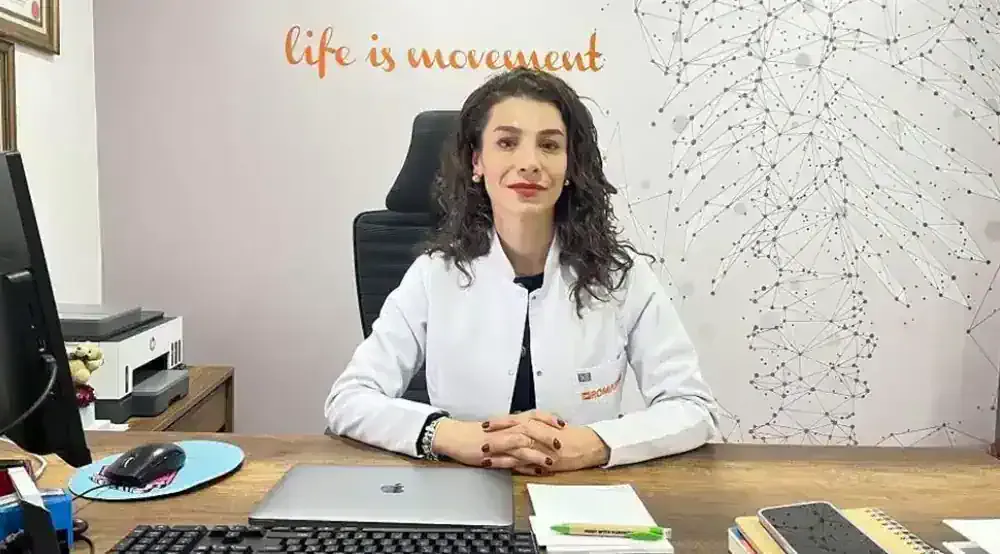
“Lymphoedema is fluid collecting in the tissues because of a blockage in the lymphatic system. It has to be diagnosed early and treated. Left untreated it is progressive and can limit the patient badly during oncological rehabilitation. Awareness is very important to us. We want patients to come to us before they have surgery, so that we can set up their exercises and they can protect themselves better,” said Assoc. Prof. Dr. Seçil Pervane, physical medicine and rehabilitation specialist at Romatem Ankara.
Where rehabilitation fits in cancer care
Over the last 30 to 40 years cancer has been diagnosed much earlier in developed and developing countries, and survival has lengthened. With that, patients live with a range of problems that arise from the disease and its treatment. “That is where we come in as physical medicine and rehabilitation physicians. After the diagnosis and after the acute treatment, whether surgery, radiotherapy or chemotherapy, patients face certain problems, and we step in so that they live a more functional, healthier and better life. We accompany them to the end of life,” she said, adding that cellular therapies, gene therapies and immunotherapy are lengthening survival further.
Long treatment can weaken patients: time in bed leads to loss of muscle strength and stiffening of joints. “We should be part of preventive care from the very beginning, and prescribe exercise so that muscle is not lost and joints do not stiffen. And if a patient has come to us late, we should be with them for the rest of the process so that what was lost is regained, or nothing more is lost.” Pain treatment is central to daily life and quality of life, with physical therapy agents, medication and complementary methods such as acupuncture available.
One in four after breast cancer
In Türkiye and worldwide one woman in seven develops breast cancer. After surgery, chemotherapy or radiotherapy, problems can arise in the lymph nodes and vessels, and the arm, sometimes the shoulder, hand or trunk, can swell. “This is lymphoedema, and we see it in one in four women who have surgery or other treatment for breast cancer.” It also occurs after bladder cancer, ovarian, uterine and cervical cancers, and malignant melanoma, and can even follow a biopsy. Swelling, heaviness and pain follow, and without early treatment there can be swelling and loss of function in the arm, leg, trunk or genital area. Even when the cancer itself has been cured, the physical picture can burden the patient and those around them.
“Awareness of lymphoedema in Türkiye has only grown over the last ten years, so we still reach some patients very late. If a patient comes to us before surgery, we explain from the start the shoulder restriction that can occur early after surgery, elbow pain or restriction, and the swelling that can develop later. They learn the exercises, what to do preventively, and when and where to come if the arm or leg swells. In the oncological rehabilitation clinics we want to see patients even before surgery, or in the first two to four days after it.”
What treatment involves
“There are new devices in physical therapy, and not all of them can be used in a patient with cancer; some we approach gradually and protectively so that they do not encourage the spread of cancer cells. That is where expertise comes in: knowing what not to do matters as much as knowing what to do. But there is a great deal of technology and research, and we can use very new technology in a controlled and safe way. We also have large exercise units that allow every exercise for every limb to be done correctly, which we use to strengthen muscle, and pressure-adjustable devices for lymphoedema once it has developed. Oncological rehabilitation is teamwork. The point is to achieve the greatest possible well-being with the least effort for the patient. Surgery, chemotherapy and radiotherapy are essential for life, but afterwards the rehabilitation team has much to offer. I ask patients to trust us with that.”
Original title
Doç. Dr. Seçil Pervane, lenfödem de erken tanının önemine dikkat çekti — DHA
News
More news
 Our clinicians in the pressEarly intervention after stroke saves livesAt a “Stroke School” for patients and families at Romatem Move Çamlıca, neurologist Dr.
 Our clinicians in the pressSpinal cord injury rehabilitation has to be planned for the individualProf. Dr.
 Our clinicians in the pressIndividually planned treatment for MS and Parkinson’s diseaseA rehabilitation unit built for MS, Parkinson’s and cognitive patients: what a five-person team does for gait, balance and memory, and how the work continues at home.



