
Remote
Assessment and second opinion
A structured review of existing records and imaging by a rehabilitation physician, producing a written opinion on what is realistically achievable and over what timeframe. The report is written to be usable by clinicians in your own country, and you are not required to have the treatment with us.
An assessment you can act on, wherever you have it done
A structured evaluation by a physician in physical medicine and rehabilitation with the relevant therapists, producing a written report: what the problem is, what is realistically achievable, what programme would achieve it, over what timeframe, and at what cost.
The report is written to be usable by clinicians in your own country. You are not required to have the treatment with us, and the assessment is not structured to lead to that conclusion.
What a second opinion is useful for
When you have been told nothing more can be done. When you have been offered surgery and want to know whether rehabilitation is a genuine alternative. When a programme has not produced change and you want to know whether the programme or the goal is wrong. When you are deciding between providers and want an independent view of what is realistic.
It is also useful before committing to expensive treatment abroad, including with us.
What we need from you
Imaging and reports, operation notes, discharge summaries, current medication, and previous rehabilitation records. The more complete the history, the more useful the opinion — an assessment based on examination alone misses what has already been tried.
Records can be reviewed remotely in advance, which shortens the in-person assessment and sometimes shows that travel is not necessary.
What we will tell you
Including when the honest answer is that a programme with us would not add enough to justify the travel and expense, or that what you need is available closer to home.
We would rather give that answer than take a booking we do not believe in.
Why this is offered separately
The most expensive decision in treatment abroad is made before anyone has examined the patient: whether to travel at all. A written opinion based on the records lets that decision be made with information rather than with hope.
It is deliberately available as a standalone product. You are not required to book anything afterwards, and the opinion is written the same way whether you do or not.
When the answer is that a programme is not worth it
That answer is given when the realistic gain does not justify the travel and cost, when what is needed is available closer to home, or when the patient is not currently in a state to benefit.
It is written down in the same document with the reasoning attached, so it can be taken to another clinician. A service that never produces this answer is not assessing anything.
How often does a second opinion change the plan?
Usually it confirms it. A systematic review of patient-initiated second opinions found that a second opinion typically confirms the original diagnosis or treatment, yet 10% to 62% led to a major change in diagnosis, treatment or prognosis, and advice on treatment changed more often than the diagnosis 1.
A later review of 33 studies also found that many second opinions confirm the original plan, and that how often opinions differ varies considerably between medical specialties 2. The evidence is limited, and whether the second opinion proved the more accurate one is generally unknown 1. A second opinion tests a plan; it does not by itself show that the new advice is better.
Sources
- Payne VL, Singh H, Meyer AN, Levy L, et al. Patient-initiated second opinions: systematic review of characteristics and impact on diagnosis, treatment, and satisfaction — Mayo Clinic Proceedings (2014)
- Greenfield G, Shmueli L, Harvey A, Quezada-Yamamoto H, et al. Patient-initiated second medical consultations-patient characteristics and motivating factors, impact on care and satisfaction: a systematic review — BMJ Open (2021)
Conditions this programme treats
The 3 conditions this programme is built for, grouped by area.

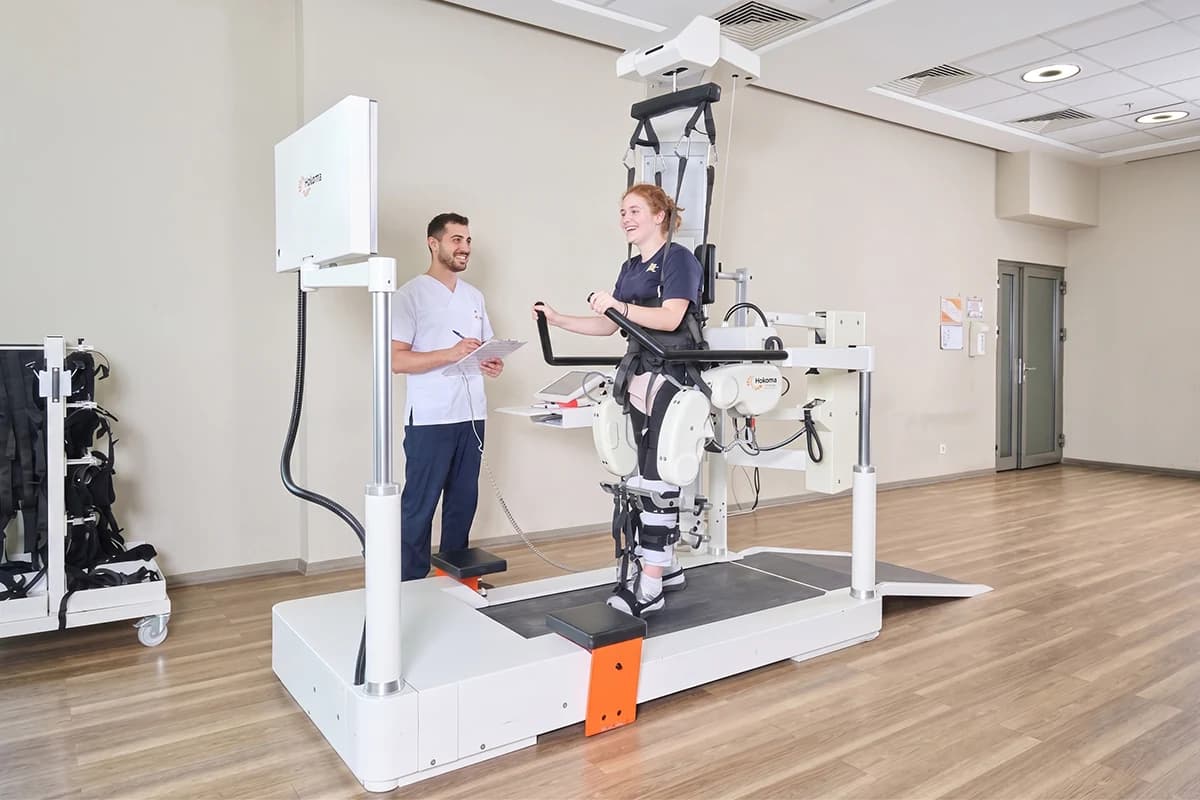
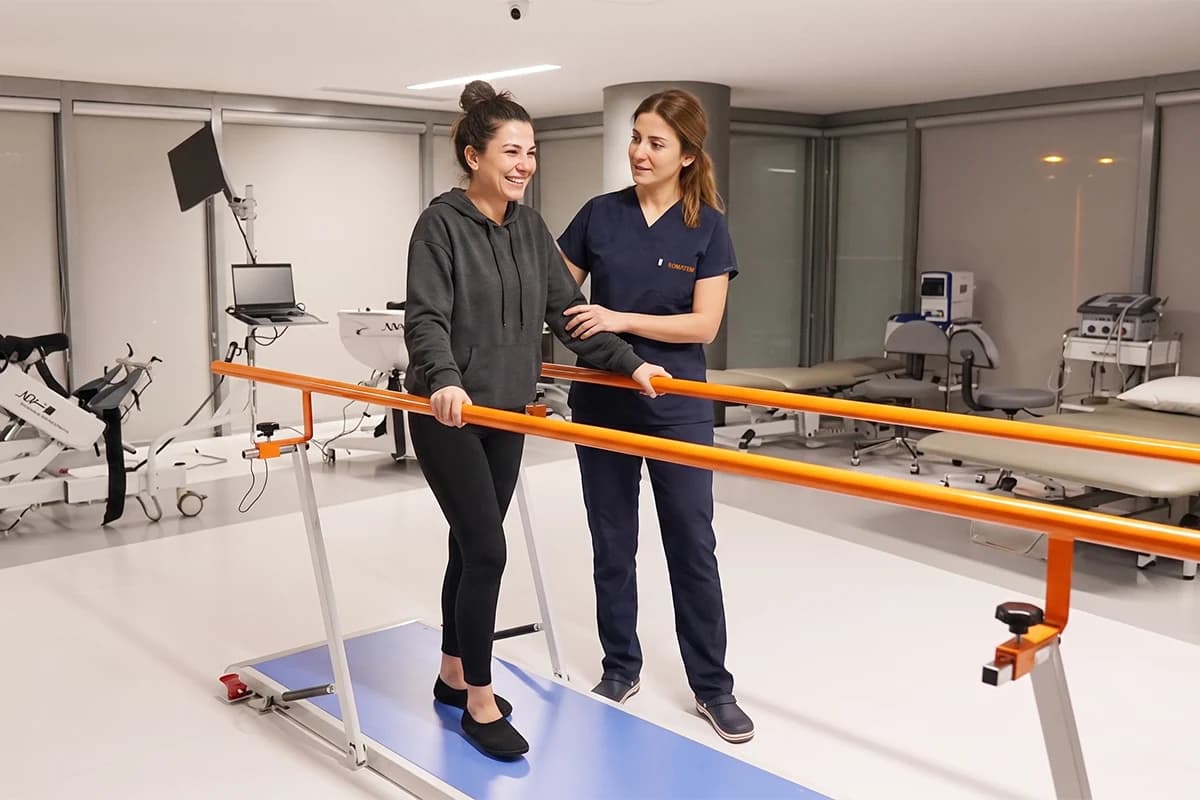
The programme is chosen after a rehabilitation physician has read your records — not from this page.
Your path to this treatment
Nothing here is booked from a page. You send the records you have, a rehabilitation physician reads them, and you get a written answer — including when the answer is that an intensive programme will not help.
4 steps, start to finish
1.Send your records
A discharge summary from the hospital that treated the original event, and any imaging of the affected area — CT, MRI or X-ray.2.A written plan in 48 hours
A rehabilitation physician reviews the case and returns the expected duration, the recommended programme and the centre. Free, no obligation.3.Travel and admission
Where a visa is needed we issue an invitation letter and treatment confirmation naming the dates and the facility. You are met at the airport and driven to the centre by private vehicle or ambulance; a bed for one companion and interpreting during therapy are arranged.4.Treatment, then home
The programme runs, then you leave with a discharge report and a written home exercise plan. Your return journey is organised before you go, with scheduled video reviews so progress does not stop.
In their words
What patients say after a programme
Short videos filmed during therapy: a child’s rehabilitation after a brain tumour, suspended gait training after spinal cord injury, and learning to walk again after a fall. Individual results vary.
Dave Evans on his physical therapy here
Musculoskeletal physiotherapy
Paediatric rehabilitation after a brain tumour
Inside a physiotherapy session
Spinal cord injury — the rehabilitation process
Suspension-assisted gait training
Walking difficulty and restricted movement after a fall
Regaining gait and range of motion
Locations
Where this programme runs — pick a centre.


Questions people actually ask
About this programme
What do I need to send?
Recent clinical letters, imaging reports and the images themselves where available, the operation note if there has been surgery, and a current medication list. A description of what the patient can and cannot do now is as useful as the imaging.
How long does it take?
A written opinion within 48 hours of receiving complete records. Incomplete records are the usual reason it takes longer, and we say what is missing rather than working around it.
Is it really free?
The written treatment plan is. A formal second opinion on an existing surgical or treatment plan is a separate service, and its terms are set out in writing before any work begins.
Can I use the opinion elsewhere?
Yes. It is written to be usable by any clinician, in plain language with the reasoning stated. It is yours regardless of what you decide.
Will you tell me if my current plan is right?
If it is, we will say so. Confirming an existing plan is a legitimate outcome of a second opinion and it happens frequently 1.



