

Medical condition
Brachial Plexus Injury
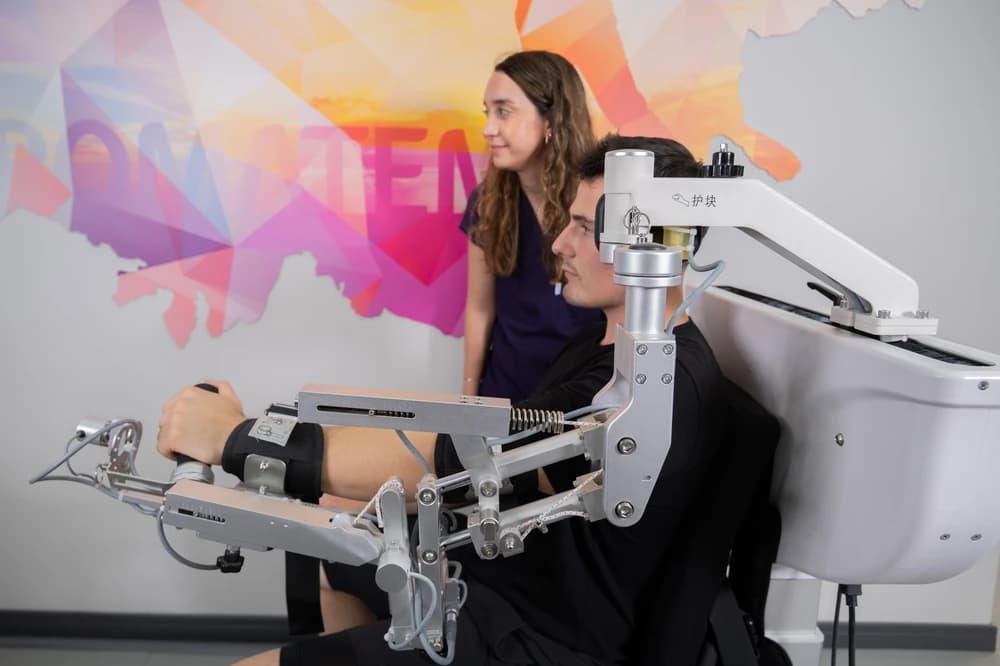
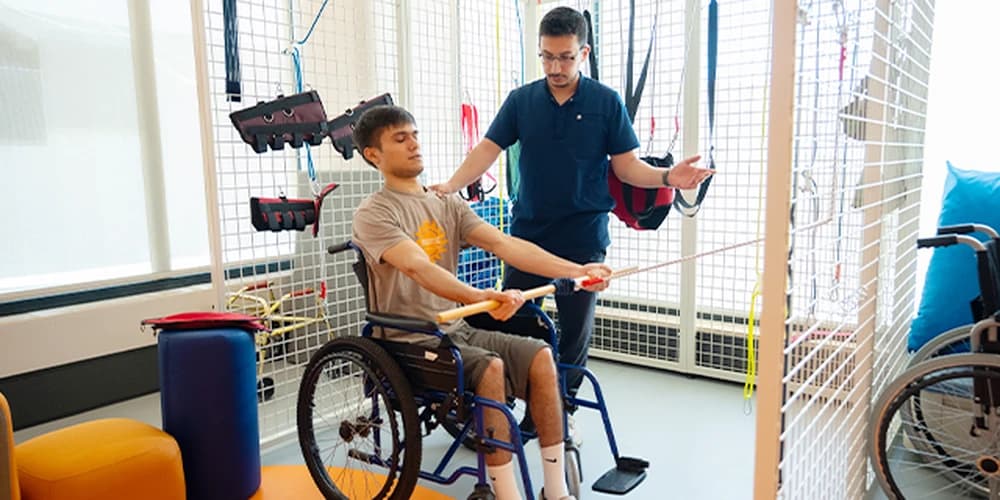
Brachial plexus rehabilitation protects the joint and the muscle while the nerve recovers, which can take many months. Robotic arm support allows guided movement long before the patient can lift the arm alone. If the shoulder is allowed to stiffen meanwhile, function stays limited even when the nerve recovers well.
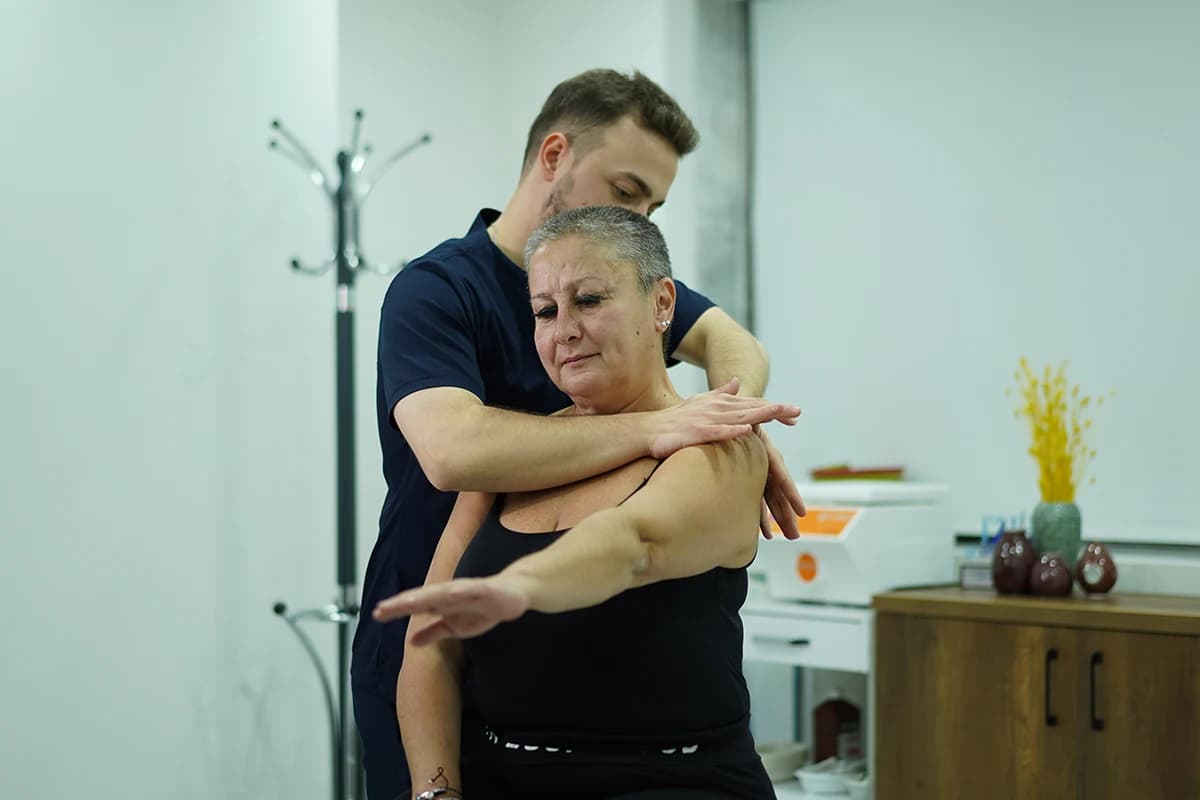
What the brachial plexus does and what happens when it tears
The brachial plexus is the network of nerves running from the neck into the shoulder that controls the shoulder, arm, elbow and hand. When it is damaged the arm loses power, movement reduces and in severe cases the limb hangs still.
In newborns the injury happens during delivery — shoulder dystocia, a prolonged or instrumental delivery, or high birth weight. It is a consequence of the birth process, not of anything a parent did. In adults it usually follows a motorcycle accident, a fall onto the shoulder or a penetrating injury.
What parents notice first
The clearest sign in a newborn is asymmetry: the baby moves one arm noticeably less than the other. The arm may lie limp and close to the body, the shoulder may not lift, and grip on that side may be weak.
Any persistent asymmetry of arm movement in a newborn should be assessed rather than watched. Diagnosis is clinical, supported where needed by EMG and imaging.
Why the first months decide the outcome
The underlying problem is a break in the signal between nerve and muscle. Nerves recover slowly, and while they do, the muscles they supply waste and the shoulder joint stiffens. If the joint is allowed to contract, function will be limited later even if the nerve recovers well.
Rehabilitation during this window keeps the joint mobile and the muscles active so that returning nerve signal has something to work with. The first three to six months are the critical period 2, and treatment should begin as soon as the diagnosis is made.
What the programme involves
Passive and active range-of-movement work to prevent contracture, muscle stimulation, positioning, and — as recovery allows — active movement training. In children this is play-based and delivered largely by the parents, who are trained at each session.
Progress is reviewed on a schedule. Where recovery stalls at the expected milestones, surgical opinion is sought at the point it is still useful rather than after the window has closed. Surgery is needed only in a minority of cases.
The pattern of injury determines the outlook
A stretched nerve that remains in continuity often recovers substantially. A nerve torn from the spinal cord does not recover on its own and needs surgical assessment early.
Distinguishing these is what examination and, where needed, imaging and nerve studies achieve — and the distinction changes everything about what is offered.
Preventing the secondary problem
While the nerve recovers, the shoulder is at risk of losing range and the joint of deforming. In infants this can produce a permanent internal rotation contracture that is harder to treat than the original weakness.
Daily range-of-movement work, positioning and, in adults, support for the shoulder against traction are what protect the joint during the months of waiting.
Frequently asked questions
Will my baby recover?
Most infants with birth-related brachial plexus injury recover substantially, and recovery of biceps function by around three months is a favourable sign 2. Those who have not recovered by then need specialist surgical assessment.
How long does nerve recovery take?
Nerves regenerate at roughly a millimetre a day 1, so recovery is measured in months and depends on how far the nerve has to grow. That distance can be estimated and gives a realistic timeline.
Is surgery ever needed?
Yes, where the nerve is torn from the cord or where recovery has not begun within the expected window. Timing matters — waiting too long means the muscle is no longer viable when reinnervation arrives.
What can be done while waiting?
Maintaining joint range, preventing contracture, keeping the muscle viable with electrical stimulation where appropriate, and training compensation for daily tasks.
Was this caused by something we did?
No. Birth-related injury is not caused by parenting and it is not something families could have prevented, though it is a common source of guilt.
Sources
- Peripheral nerve reconstruction after injury: a review of clinical and experimental therapies — BioMed Research International (Grinsell D, Keating CP) (2014)
- Prognosis following neonatal brachial plexus palsy: an evidence-based review — Journal of Children's Orthopaedics (Foad SL, Mehlman CT, Foad MB, Lippert WC) (2009)
Which therapies would I actually receive?
A therapy is a single method used inside a programme. It is measured in sessions and is not sold separately.
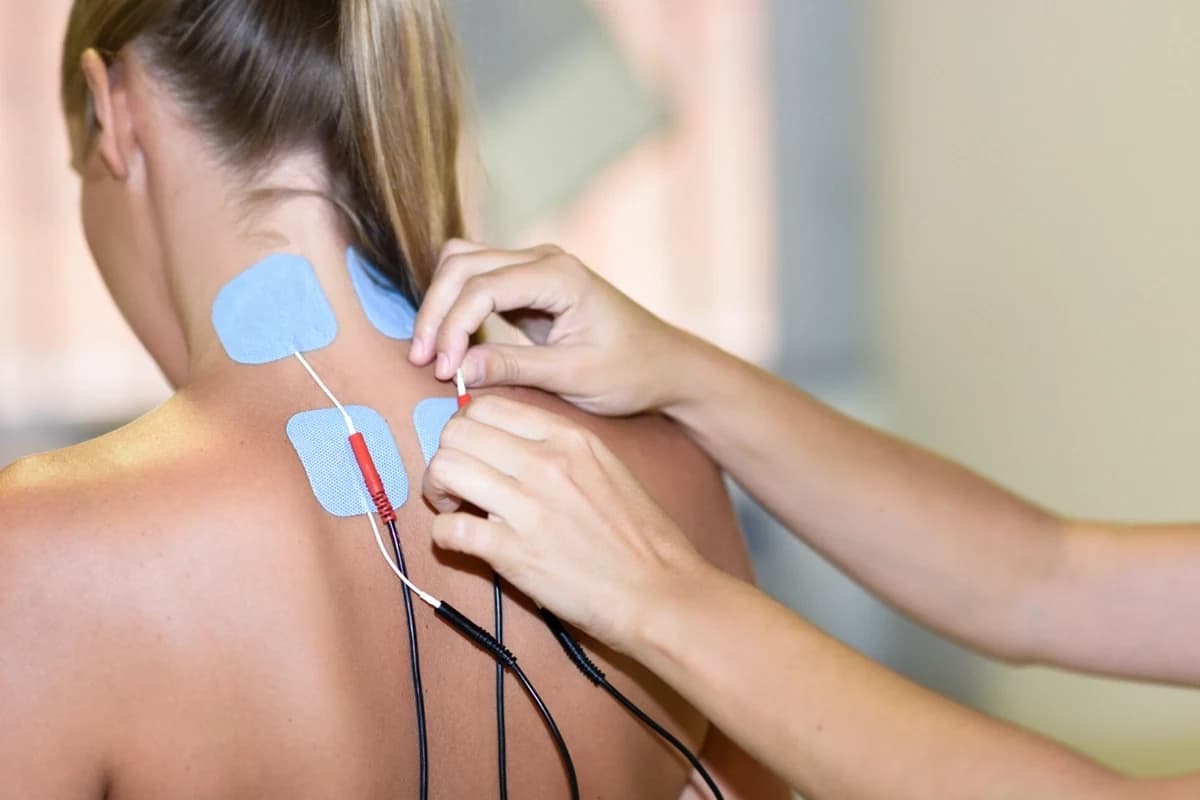

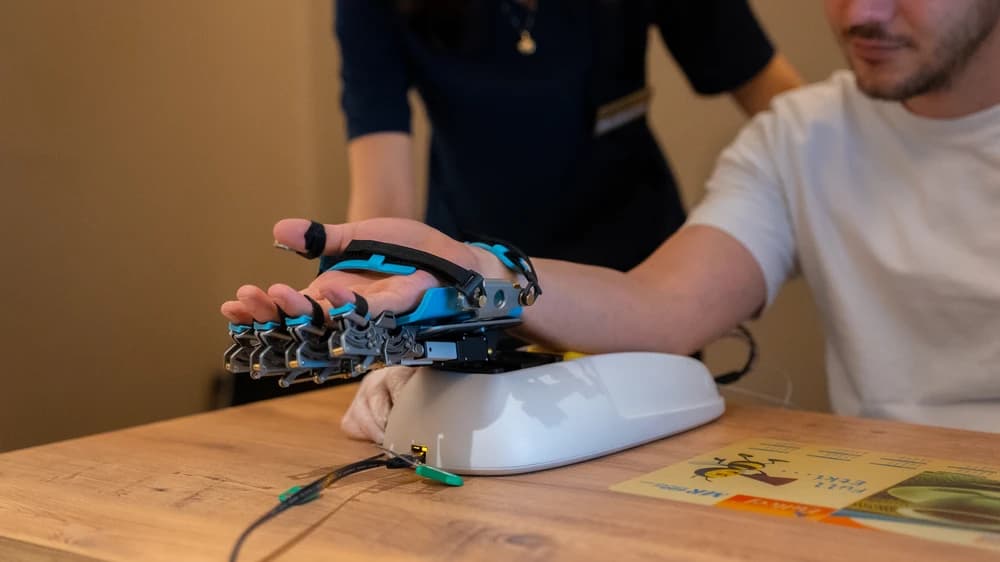
Technologies we use
Locations
Where you can receive this treatment



Related articles
Neurological How long does it take to recover from a stroke?
Most recovery after a stroke happens in the early months, when the brain is most able to reorganise, and it continues more slowly for a longer period after that. How far someone gets depends mainly on how severe the stroke was, where it happened and how much active therapy follows.Read moreNeurological Can you walk again after a stroke?
Many people walk again after a stroke, including many who cannot stand at first. The chances are highest when some leg movement returns early and when walking practice starts as soon as it is safe. Walking often comes back before full arm recovery, sometimes with a stick, splint or other support.Read moreNeurological Will my arm and hand recover after a stroke?
Arm and hand recovery after a stroke varies more than walking recovery. Early return of some shoulder or finger movement makes useful recovery much more likely. Repeated, meaningful practice of reaching, grasping and releasing is what drives improvement, and even a partly recovered hand can be trained to help with daily tasks.Read more



